
- Services
- Products
-
-
- Online Training
- Information Security Awareness Training Course
- PCI DSS Compliance Bundle
- GLBA Awareness Training Course
- CMMC Training Course
- HIPAA Awareness Training Course
- Data Privacy Training Course
- Payments Security Training Course
- Phishing Awareness Training Course
- GDPR Training Course
- FERPA Training Course
- FACTA Training Course
- Online Training
-
- Compliance
- Markets
- Insights
- About
GDPR Course Description
This course covers the General Data Protection Regulation (GDPR) and how it applies across organizations. This course will review:
- Key concepts and requirements from GDPR
- Best practices for collecting and processing personal data
- Individual rights granted under GDPR
- Violations and penalties for non-compliance
- Real-world examples and lessons learned
Target Audience: All staff within an organization who handle, process, or have access to the personal data of EU residents
Course Length: 20 minutes
GDPR Course Learning Objectives
CampusGuard’s GDPR course provides an overview of the key protections under GDPR.
Key learning objectives include:
- Understanding the purpose and scope of GDPR
- Identifying the responsibilities of primary GDPR roles and responsibilities
- Learning the core GDPR principles, including lawfulness, fairness, transparency, data minimization, confidentiality, and accountability
- Identifying covered data under GDPR, including identifiers like names, IP addresses, financial records, etc.
- Understanding key compliance requirements, consent requirements, record-keeping obligations, and mandatory breach notifications
- Understanding data subject rights
- Applying technical, physical, and administrative safeguards
- Reviewing real-world GDPR violations and lessons learned
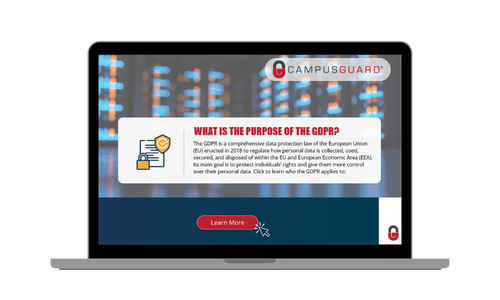
GDPR Course Modules
Our GDPR course is designed with micro-learning modules, making the content easier to retain. This course is designed to help your organization and staff safeguard sensitive personal information and prevent potential data breaches.
-
GDPR Overview
This training module introduces the General Data Protection Regulation (GDPR), provides an overview of the regulation’s requirements, and helps users understand what impact the GDPR may have within their organizations. -
Complying with the GDPR
This module reviews best practices for data collection and handling, safeguards for protecting data, and requirements for reporting potential data breaches. The module also reviews several real-world examples of risks and lessons learned.
 Explore our other courses
Explore our full course library to find training that fits your needs, from security awareness and compliance essentials to specialized topics designed to support your role and responsibilities. Whether you’re looking to strengthen your cybersecurity posture, stay up to date with industry regulations, or broaden your knowledge, we’ve got you covered.
Related Products and Services



Building a Culture of Data Privacy
CampusGuard’s GDPR training equips employees with the knowledge to handle personal data responsibly, reducing the risk of breaches caused by human error. Ongoing education demonstrates accountability and helps organizations maintain consistent, defensible compliance with EU data protection regulations.
GDPR Training Frequently Asked Questions
While the GDPR does not explicitly say “training is mandatory,” it requires organizations to ensure staff handling personal data understand data protection obligations (Articles 39 and 32). Training is considered a key part of demonstrating accountability and compliance.
Anyone who handles, processes, accesses, stores, or manages personal data should receive training, not just IT or legal teams. This includes HR, admissions, finance, marketing, support staff, and leadership.
Best practice is:
- At onboarding
- Annually for all staff
- Whenever regulations change
- After incidents or audit findings
- When job roles change
Training should include:
- GDPR principles and lawful bases
- Personal vs. sensitive data
- Individual data subject rights
- Data breaches and reporting
- Phishing and social engineering
- Secure data handling and storage
- Role-specific responsibilities
Lack of training is frequently cited in:
- Data breaches
- Regulatory investigations
- Fines for non-compliance
- Audit findings
- Reputational damage
Human error is one of the top causes of GDPR violations.
If they process or access personal data on your behalf, yes. This can be addressed via:
- Contractual requirements
- Vendor training attestations
- Shared training materials
Training helps employees:
- Recognize phishing and scams
- Handle data securely
- Report incidents quickly
- Avoid common compliance mistakes
No. Any organization that processes personal data of EU/EEA residents must comply, regardless of where the organization is located.