- Services
- Products
-
-
- Online Training
- Information Security Awareness Training Course
- PCI DSS Compliance Bundle
- GLBA Awareness Training Course
- CMMC Training Course
- HIPAA Awareness Training Course
- Data Privacy Training Course
- Payments Security Training Course
- Phishing Awareness Training Course
- GDPR Training Course
- FERPA Training Course
- FACTA Training Course
- Online Training
-
- Compliance
- Markets
- Insights
- About

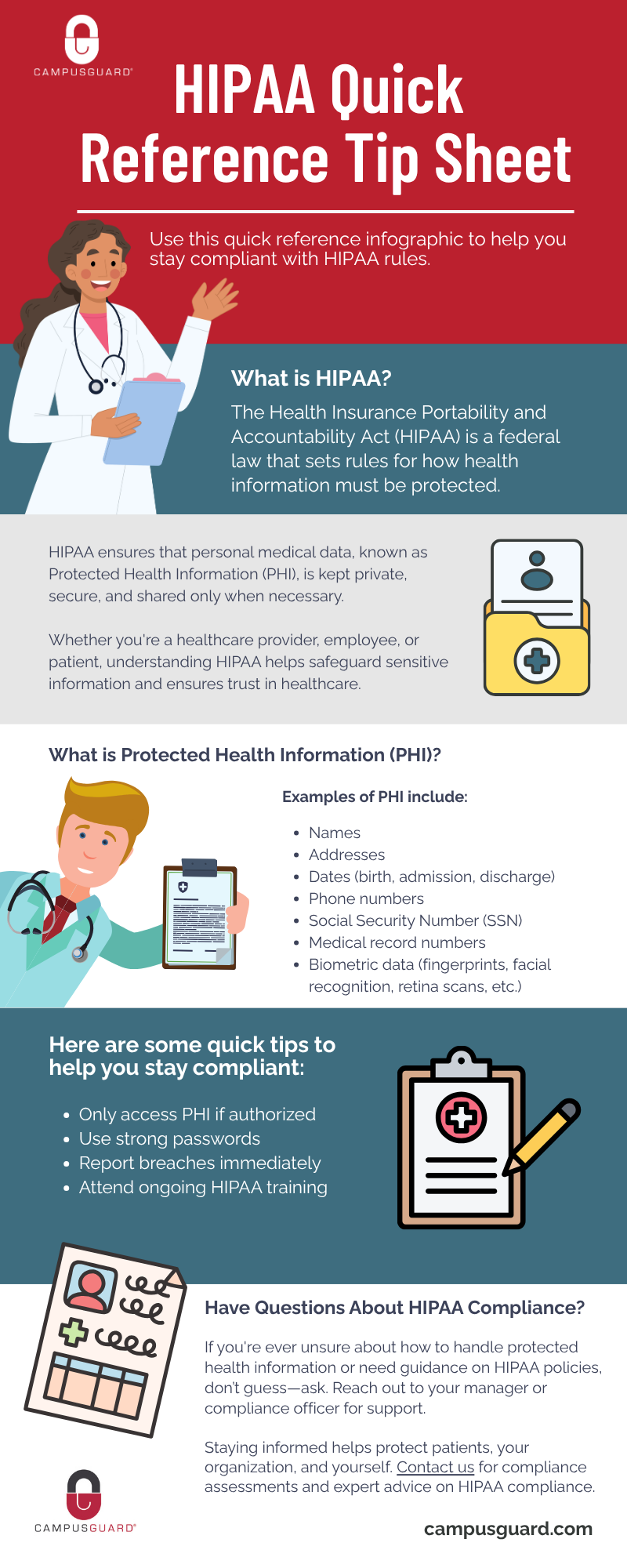
Use this quick reference infographic to help you stay compliant with HIPAA rules.
What is HIPAA?
The Health Insurance Portability and Accountability Act (HIPAA) is a federal law that sets rules for how health information must be protected.
HIPAA ensures that personal medical data, known as Protected Health Information (PHI), is kept private, secure, and shared only when necessary.
Whether you’re a healthcare provider, employee, or patient, understanding HIPAA helps safeguard sensitive information and ensures trust in healthcare.
What is Protected Health Information (PHI)?
Examples of PHI include:
- Names
- Addresses
- Dates (birth, admission, discharge)
- Phone numbers
- Social Security Number (SSN)
- Medical record numbers
- Biometric data (fingerprints, facial recognition, retina scans, etc.)
Here are some quick tips to help you stay compliant:
- Only access PHI if authorized
- Use strong passwords
- Report breaches immediately
- Attend ongoing HIPAA training
Have Questions About HIPAA Compliance?
If you’re ever unsure about how to handle protected health information or need guidance on HIPAA policies, don’t guess—ask. Reach out to your manager or compliance officer for support.
HIPAA ensures that personal medical data, known as Protected Health Information (PHI), is kept private, secure, and shared only when necessary.
Whether you’re a healthcare provider, employee, or patient, understanding HIPAA helps safeguard sensitive information and ensures trust in healthcare.
Need assistance with your HIPAA Compliance program? Contact us if you have questions, need guidance, and to get started!