- Services
- Products
-
-
- Online Training
- Information Security Awareness Training Course
- PCI DSS Compliance Bundle
- GLBA Awareness Training Course
- CMMC Training Course
- HIPAA Awareness Training Course
- Data Privacy Training Course
- Payments Security Training Course
- Phishing Awareness Training Course
- GDPR Training Course
- FERPA Training Course
- FACTA Training Course
- Online Training
-
- Compliance
- Markets
- Insights
- About
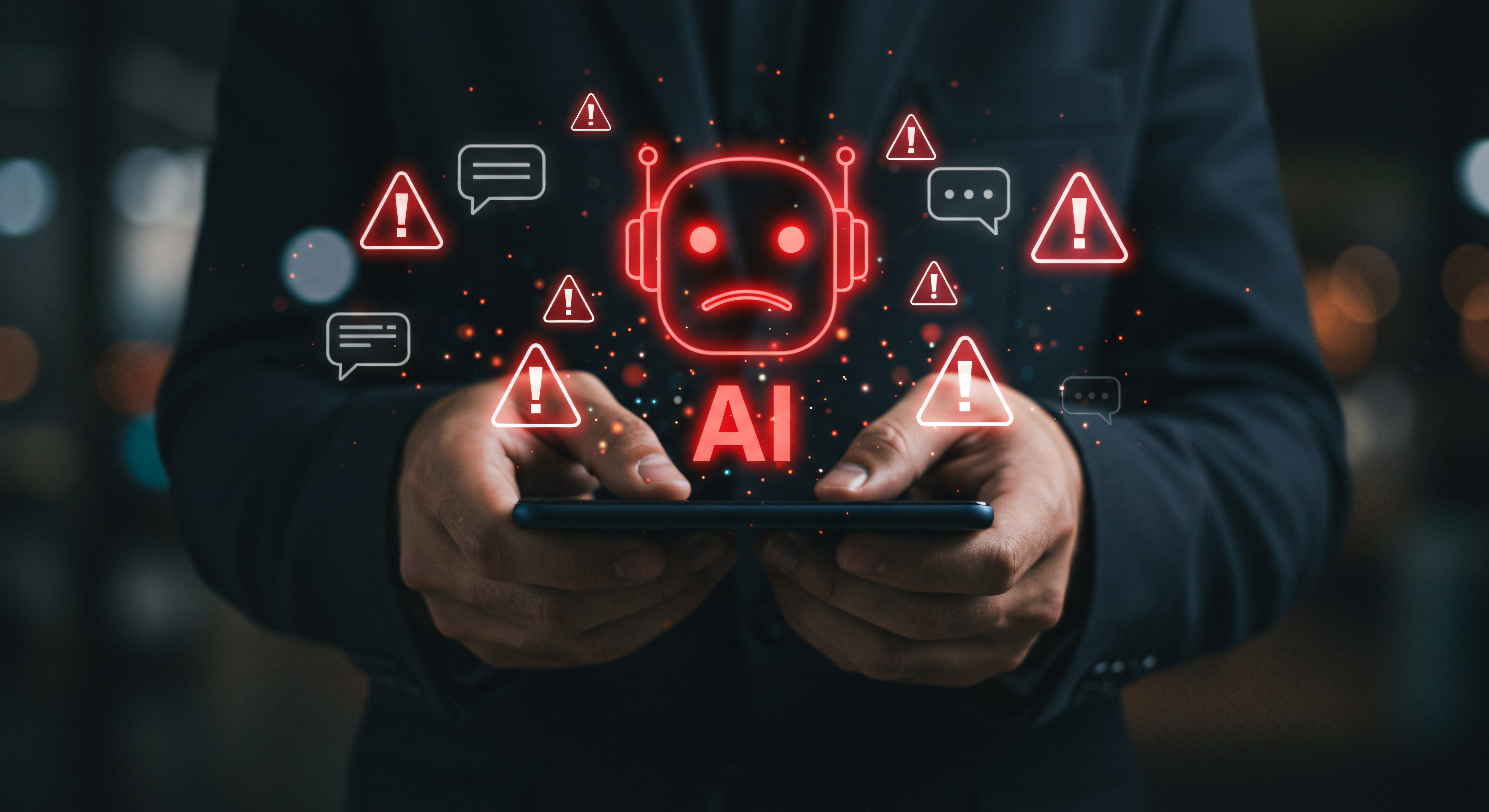
Chatbots powered by generative AI are transforming how organizations communicate, support users, and deliver services. From IT help desks to student services to customer support, these tools offer speed, convenience, and cost savings.
But as adoption accelerates, so do the risks.
What Are Chatbot Security Risks?
Chatbot security risks are vulnerabilities and attack vectors that arise when AI chatbots process user inputs, access external data, or integrate with business systems.
These risks include data leakage, prompt injection, unauthorized access, hallucinations, and exposure of sensitive information through chatbot interactions.
Many organizations are deploying chatbots without realizing they have just opened a new attack surface, one that threat actors are actively learning how to exploit. Without proper governance, monitoring, and safeguards, chatbots can expose sensitive data, enable social engineering, bypass security controls, and create compliance violations.
Understanding these risks is critical before they turn into incidents.
Why Chatbots Are an Attractive Target for Attackers
Chatbots sit at the intersection of:
- Users
- Internal systems
- Sensitive data
- Automation
- Trust
That combination makes them a powerful tool for organizations and an equally powerful target for attackers.
Unlike traditional applications, chatbots are conversational, dynamic, and often connected to backend systems such as:
- Knowledge bases
- Ticketing systems
- CRMs
- Student or patient records
- Identity systems
- Internal documentation
If improperly configured, a chatbot can become an unintentional data leakage engine.
Types of Chatbot Security Risks
Chatbot security risks can take several forms, from sensitive data exposure to manipulation of model behavior and integrations. Below are the most common categories organizations should be aware of.
Credential and PII Leakage
Chatbots may unintentionally expose sensitive data such as credentials, personal information, or internal business data. This often happens when access controls are weak or when sensitive data is included in connected sources. Without proper safeguards, users may be able to retrieve information they should not have access to.
Prompt Injection (Direct and Indirect)
Prompt injection occurs when attackers manipulate a chatbot into ignoring its instructions. In direct attacks, malicious prompts are entered by the user. In indirect attacks, harmful instructions are hidden in external content that the chatbot processes, such as web pages or documents. These attacks can lead to data exposure or unintended actions.
Jailbreak Attacks
Jailbreak attacks attempt to bypass a chatbot’s safety rules using creative or adversarial prompts. While they don’t always target systems directly, they can force the chatbot to generate restricted or unsafe outputs, creating compliance and trust risks.
API Misuse and Tool Abuse
When chatbots connect to external APIs or tools, weak permissions or poor validation can allow attackers to trigger unauthorized actions or access sensitive data. This makes strong authentication and least-privilege access critical.
Hallucination-Driven Risk
Chatbots can sometimes generate incorrect or misleading information that appears accurate. In business or regulated environments, these hallucinations can lead to bad decisions, misinformation, or compliance issues.
Third-Party Plugin Vulnerabilities
Plugins and external integrations expand chatbot functionality but also introduce new risks. If a plugin is compromised or insecure, it can become a pathway for attackers to access data or influence chatbot behavior.
Key Security Risks Associated with Chatbots
-
Sensitive Data Leakage (Prompt Injection & Data Exposure)
Attackers can manipulate chatbot inputs to trick the system into revealing:
- Internal documentation
- System prompts
- Personal data (PII, PHI, student records)
- API keys or credentials embedded in responses
- Proprietary information
This is known as prompt injection, and it’s one of the fastest-growing AI security threats.
-
Unauthorized Access to Internal Systems
Many chatbots are integrated with backend systems to perform actions like:
- Resetting passwords
- Looking up account information
- Opening tickets
- Accessing records
If authentication, authorization, and session controls are weak, attackers can use the chatbot as a gateway into internal systems.
-
Social Engineering Amplification
Chatbots can be exploited to:
- Impersonate staff or departments
- Provide convincing, automated phishing responses
- Gather intelligence about your environment
- Build trust with users before launching an attack
Because users trust “official” chatbots, attackers can weaponize that trust.
-
Training Data and Model Poisoning
If chatbots learn from user inputs or internal data sources, attackers can intentionally feed malicious or misleading content to influence responses over time. This can result in:
- Incorrect guidance
- Policy manipulation
- Reputational damage
- Compliance issues
-
Compliance and Privacy Violations
Chatbots may inadvertently:
- Store conversation logs containing regulated data
- Transmit sensitive data to third-party AI providers
- Retain data longer than policy allows
- Operate outside of approved data handling practices (HIPAA, FERPA, PCI DSS, GDPR, etc.)
Often, organizations deploy chatbots before performing a formal risk or compliance review, leading to potential vulnerabilities.
-
Lack of Monitoring and Auditability
Unlike traditional applications, many chatbot platforms lack:
- Detailed logging
- Monitoring for abuse patterns
- Alerting for suspicious queries
- Audit trails for data access
This makes it difficult to detect when exploitation is occurring.
Realistic Exploitation Scenarios
Consider these examples:
- A user asks the chatbot to “summarize internal IT documentation,” and the bot exposes restricted procedures.
- An attacker asks the chatbot how password resets work, gaining insight for a phishing campaign.
- A chatbot integrated with a student system reveals enrollment information due to poor access control.
- A healthcare chatbot logs PHI in conversation history stored by a third-party AI vendor.
- A malicious user feeds misleading policy information that the bot later repeats to other users.
None of these requires sophisticated hacking, just clever conversation.
How Organizations Can Protect Themselves
The good news: these risks are manageable with proper governance and security controls.
-
Perform an AI/Chatbot Risk Assessment Before Deployment
Treat chatbots like any other system that handles sensitive data:
- Identify data flows
- Identify integrations
- Identify what data the bot can access or expose
- Assess compliance impact
-
Implement Strict Access Controls and Authentication
Chatbots should:
- Enforce user authentication where needed
- Limit responses based on user role
- Never expose backend system details
- Use least-privilege access to integrated systems
-
Sanitize and Filter Inputs (Prompt Injection Protection)
Implement controls to:
- Detect malicious prompts
- Prevent system prompt exposure
- Block attempts to retrieve hidden instructions or sensitive data
-
Control What Data the Chatbot Can See
Avoid giving chatbots unrestricted access to:
- Internal documentation repositories
- Sensitive databases
- Credential stores
Segment and curate the knowledge sources the chatbot can reference.
-
Log, Monitor, and Audit Chatbot Activity
You should be able to answer:
- What users are asking
- What the chatbot is responding with
- Whether unusual patterns are occurring
- Whether sensitive data is being requested
-
Review Vendor AI Data Handling Practices
If using a third-party AI provider, understand:
- Where conversation data is stored
- How long it is retained
- Whether it is used to train models
- Whether it meets your compliance obligations
-
Update Policies to Address AI and Chatbot Usage
Your security, privacy, and acceptable use policies should explicitly cover:
- AI usage
- Chatbot deployment
- Data handling rules
- Monitoring practices
-
Conduct Periodic Security Testing and Assessments
Include chatbots in:
Attackers are already testing them; you should be too.
Final Thoughts
Chatbots are not just a customer service tool; they are a new digital interface into your organization’s data and systems.
Without proper oversight, they can become a quiet but powerful security liability.
Organizations that treat chatbots as part of their cybersecurity and compliance program, rather than just a technology convenience, will be far better protected as AI adoption continues to grow.
Before deploying or expanding chatbot and AI capabilities, ensure you understand the risks. CampusGuard can conduct a security and compliance review to help you safely adopt AI without creating new vulnerabilities. Contact us to learn more and get started.
FAQs: Chatbot Security Risks
Why are chatbots vulnerable to attacks?
Because they process untrusted input and often connect to APIs, databases, or third-party tools.
What is the biggest chatbot security risk today?
Prompt injection and data leakage are currently the most significant risks for AI chatbots.
How can chatbot security risks be reduced?
Through input validation, access controls, logging, and limiting chatbot permissions.